- How do I get into industry?
- What skills do I need to learn as a product designer or industrial designer?
- Which CAD software is used most in industry?
- How do I get an industrial design job?
If you’re studying Industrial Design, these are no doubt the main questions running through your head as you make it through your degree. These were my main questions before landing a job here at Dienamics, so as a Junior Industrial Designer and Soon-to-Graduate Student, I wanted to share with you what I’ve learned so far.
If you want to learn more about design, the industry, and manufacturing, then make sure to read through the other articles here!
Tips for Industrial Design Students
Throughout your degree, you will build the essential skills an industrial designer uses every day, from sketching and 3D modelling to communication and project management. To get the most out of your degree and prepare yourself for industry, it is important to focus not just on technical tools, but also on your interpersonal skills and personal aspirations that make you unique and will set you apart.
So, what does this actually look like?
Sketching
As crazy technology continues to get more accessible, it is crucial to remember the importance of the most fundamental design tool: pen and paper. Sketching proficiency allows you to quickly get ideas onto paper, helping you process your own thinking while clearly communicating concepts to your clients or colleagues. A clean sketch can communicate design direction, aesthetics and context of use far more effectively than words or a paragraph and can ultimately be the thing that sells your concept. Focus on your clean linework and 3D geometry practise, practise, practise!
Computer-Aided Design (CAD) and 3D Modelling
With plenty of CAD software options out there, starting your 3D modelling journey can feel overwhelming. To help figure out which software is right for you, ask yourself these key questions:
- Is the form of my design more organic or geometric?
- Is my design a large assembly with a lot of parts?
- How important is the accuracy and control of measurements?
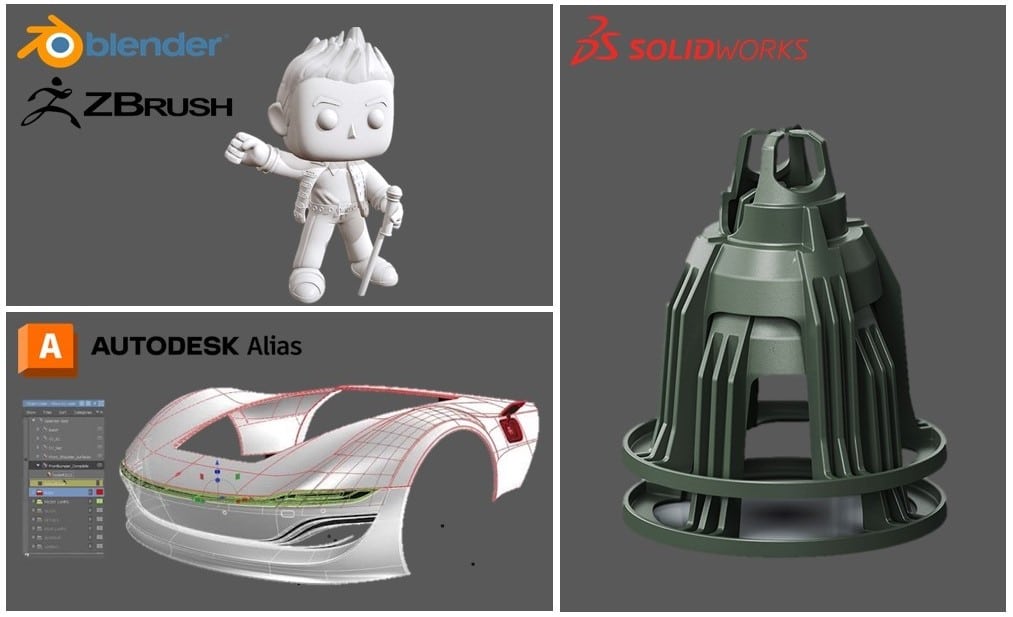
CAD software packages Blender, ZBrush, Autodesk Alias and Solidworks and a corresponding example of a 3D model made in that software. Please note the form variations across these 3D models, highlighting the strengths and specialisations of each CAD software: Blender and ZBrush – for digital sculping, Autodesk Alias – for complex surface modelling, and Solidworks – for parametric modelling with high geometric precision.
When moving into industry, every company is different and will often have specific software preferences.
As I mentioned earlier, the specific requirements of a project will often determine which CAD software is best suited. However, a company’s software preference is also dependent on additional factors such as budget and software availability. Solidworks is most common in larger in-house design teams, design firms and larger organisations. Smaller firms, however, may lean towards more cost-effective options such as Fusion 360, Inventor, or Onshape.
For most CAD models requiring suitability for manufacturing, Solidworks is most common. As we specialise in injection moulding and manufacturing at Dienamics, powerful parametric modelling with accurate geometric control and the ability for complex surface geometries are our highest priorities for CAD software, and Solidworks ticks those boxes. If you have an interest in product design and manufacturing, then spending as much time as possible in Solidworks and learning the requirements of DFM CAD is a great way to prepare yourself. Familiarising yourself with top-down modelling approaches using master or parent sketches will immediately make your workflow more sophisticated.
Also, taking the time to research different manufacturing methods and their corresponding design requirements is incredibly beneficial. As an example, injection moulding has a lot of strict requirements to make a product mouldable and significant design considerations to optimise the tooling and moulding process. This includes maintaining consistent wall thicknesses to improve material flow, removing undercuts to minimise tool complexity and designing to accommodate for certain geometries or materials to minimise warping, shrinkage, or rejected parts.
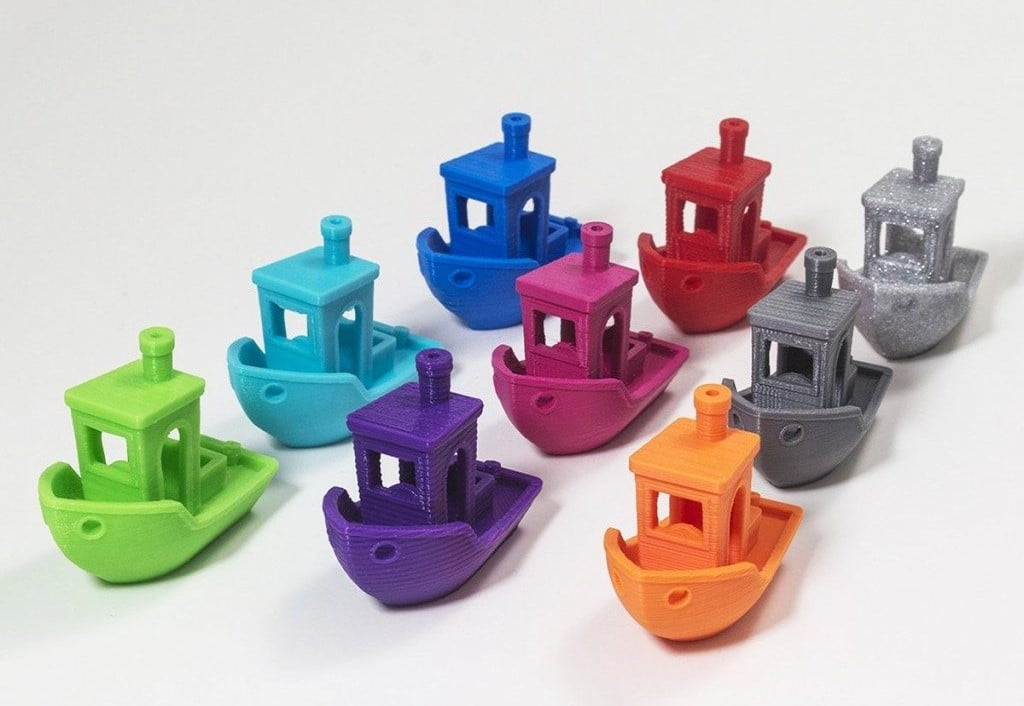
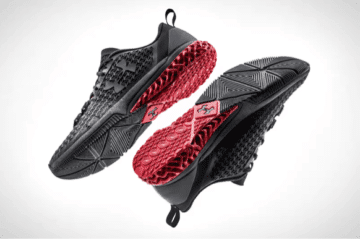
An example of 3D printed parts that would be impossible and or very difficult to injection mould in a single part without a redesign to optimise the part.
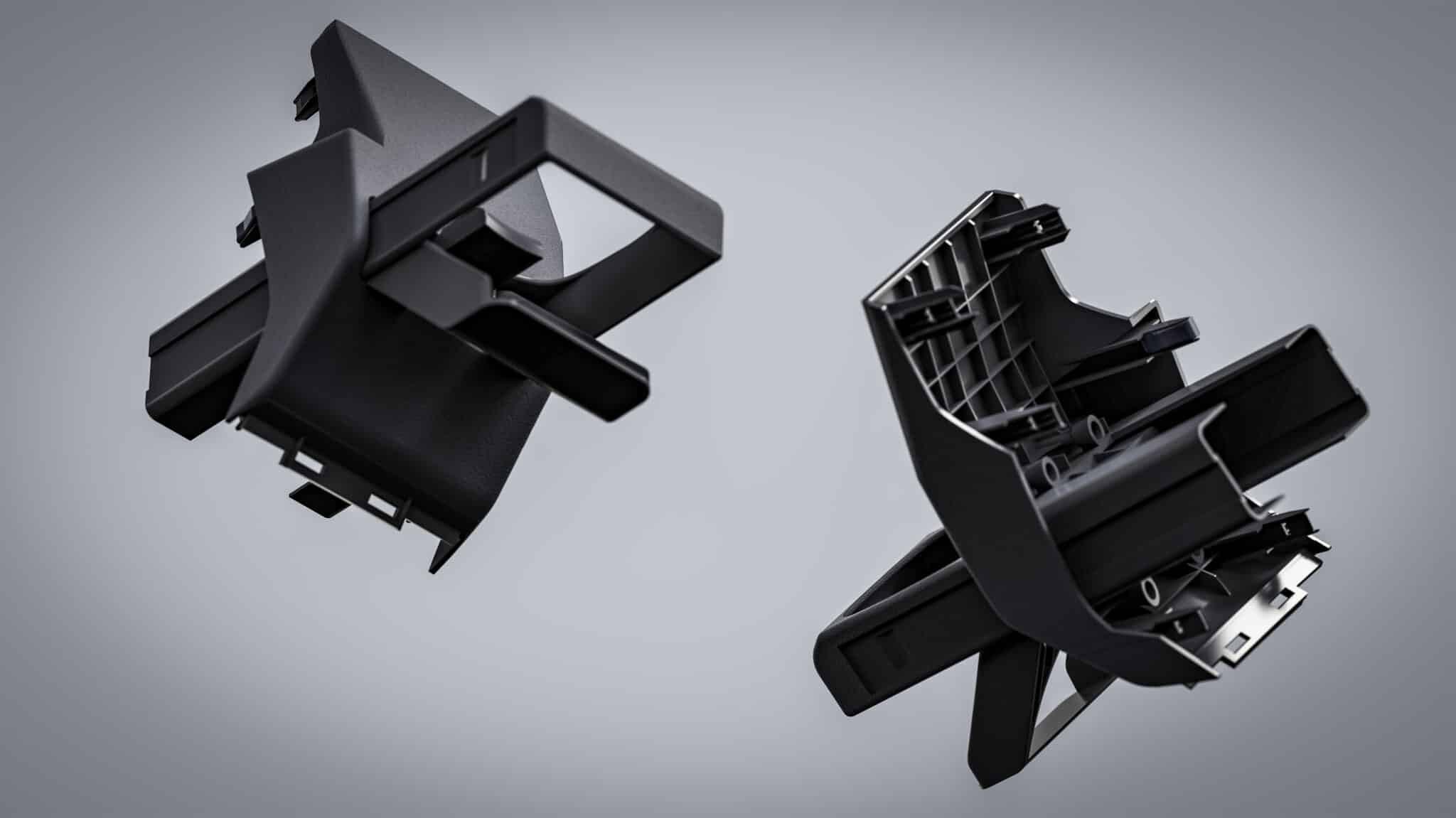
The “Passenger” Cup Holder designed by Dienamics and modelled in Solidworks, for Touring Essentials. One way this product was optimised for injection moulding was by maintaining consistent wall section throughout the part, designing the part with tool access in mind, to minimise the need for sliding actions to reach button and sliding cup tray holes, ensuring each face is precisely drafted, and adding ribs across the entire underside to increase the part’s rigidity.
While working in industry is without a doubt the best teacher – it certainly was for me – background research and practice can help you understand if it interests you, could open the door for some exciting opportunities and help soften the learning curve. Within our team of experienced tool makers, moulders and industrial designers, we at Dienamics are strong believers in the importance of manufacturing knowledge within the design space. Even if manufacturing isn’t a core interest for you, DFM knowledge can save you from unexpected and costly surprises when your design reaches a manufacturer. Whether that’s last-minute edits or, in the worst case, a complete redesign, applying this skill will save you and your clients time, stress and money, and ultimately make you a stronger industrial designer.
Design Thinking & Workflow
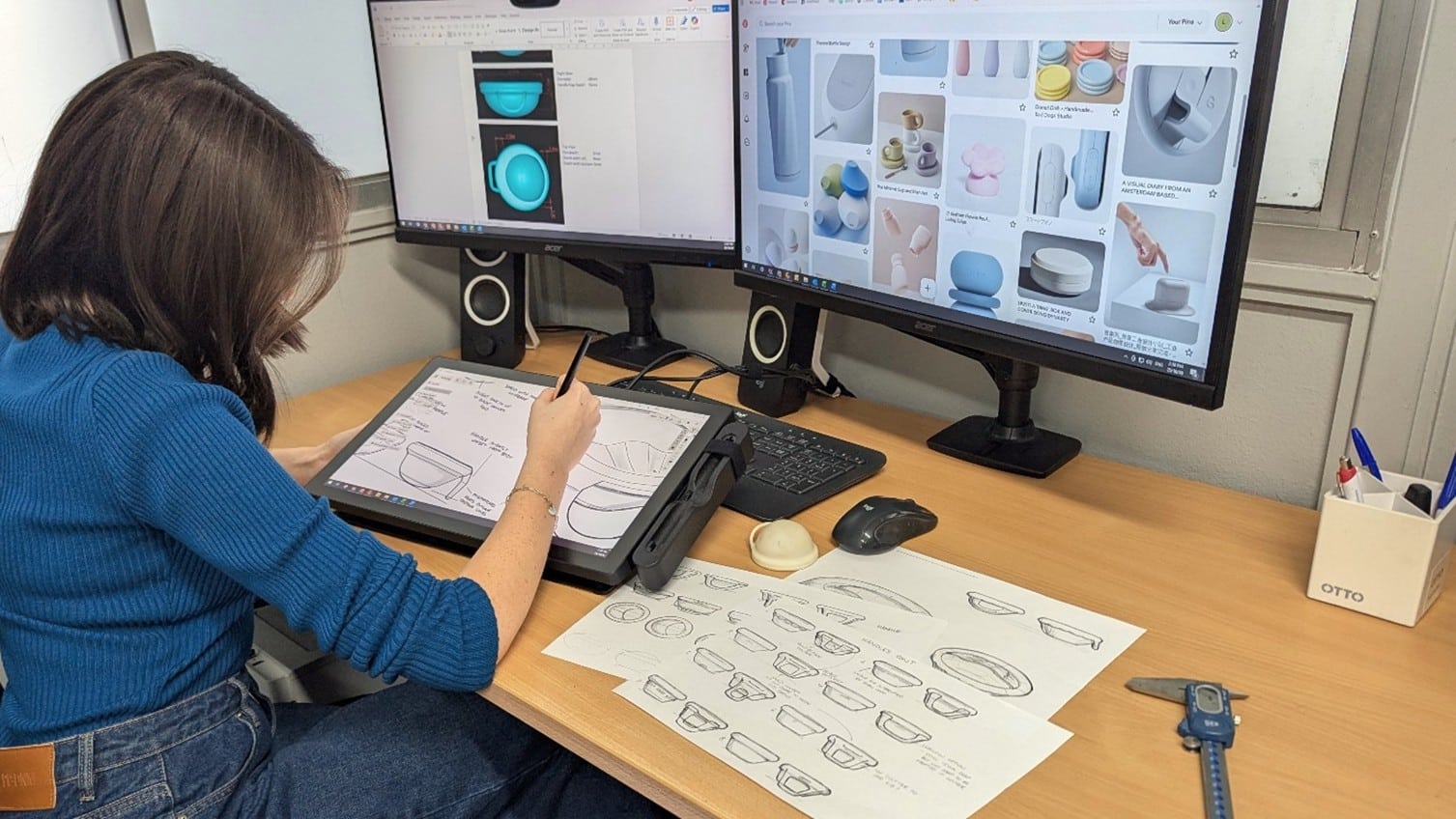
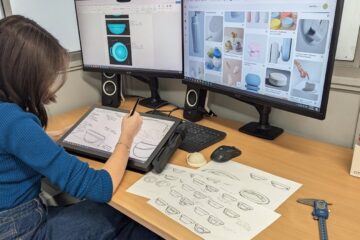
Concept sketching in the Dienamics office.
Learning the fundamentals of design at university may feel tedious but I cannot express how important these key themes are. Usability, ergonomics, and user experience are all themes that will likely start to seep into your everyday life, forcing you to subconsciously evaluate the products around you. This is a good thing! Experiencing the impacts of effective and ineffective product design reinforces the importance of good design in your own projects, allowing you to learn from objects around you and become a better designer.
University projects also provide the space to understand what process works for you and what doesn’t. Design processes are fluid and unique to each designer based on personal preference, discovering yours will allow you to work as efficiently as possible which is especially important once you start working on the clock. The better you can understand yourself through university and into your professional industrial design career, the more accurately you can plan, quote clients for your time and polish your design process.
As I am sure you know, university documentation is no walk in the park. Luckily, once you graduate, you may never need to do documentation to that level of detail ever again. However, in industry, effective documentation skills are important for:
- Tracking progress to ensure you meet deadlines
- Communicating progress to clients
- Backing your proposed concepts with evidence of ideation and refinement
- Ensuring your work is understandable if it needs to be revisited in the future by you or another designer
Though, an effective design process and good design is nothing without effective presentation.
Presentation and Communication
Successfully presenting your ideas is a huge part of being a designer, selling your ideas is just as important as coming up with them. Without clear visual communication, even your best work can look rushed, unfinished, or unprofessional; clean concept sketches and polished CAD renders are the final sells that bring your client’s vision to life.
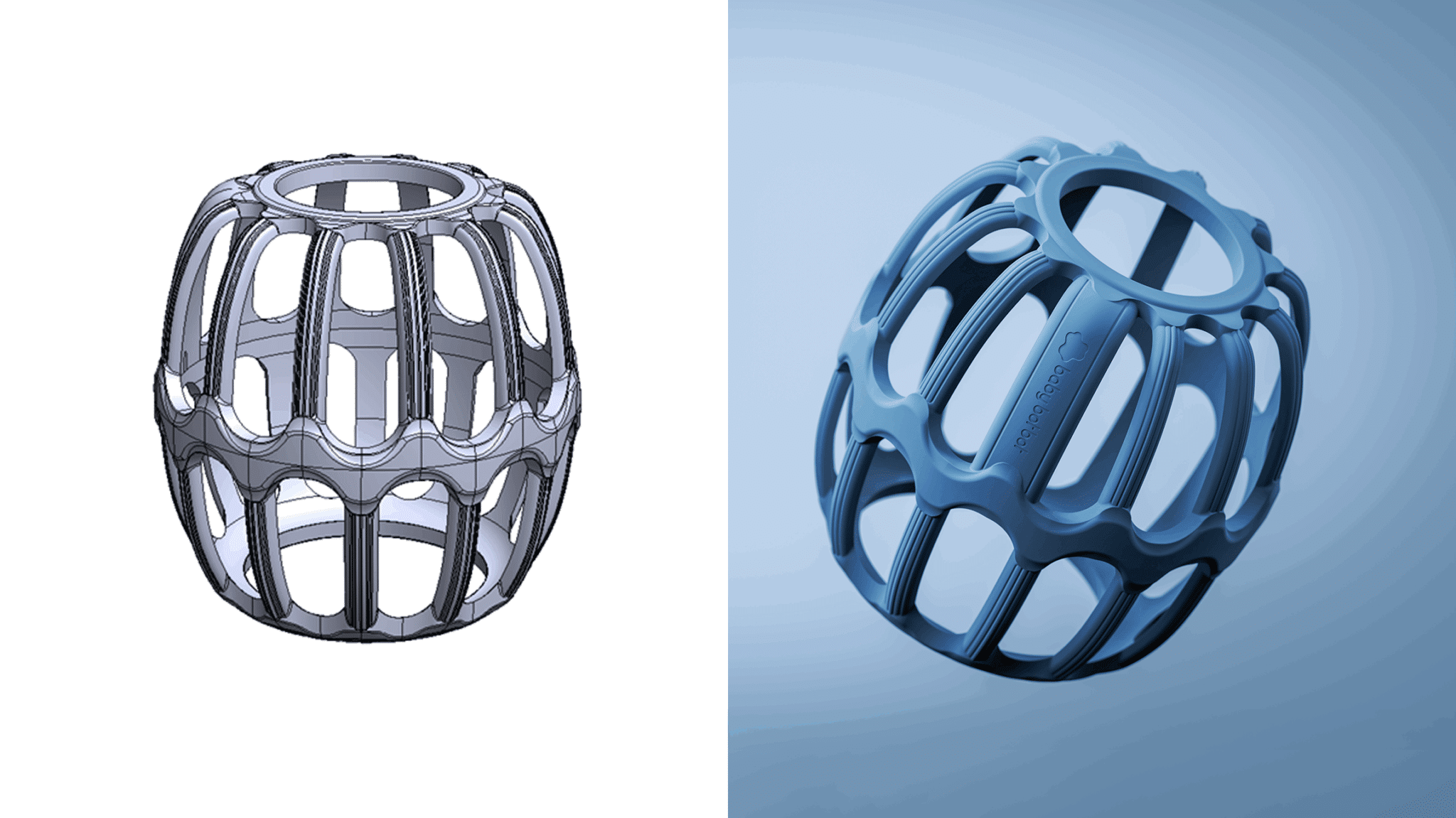
Comparison of the CAD screenshot of the award-winning Baby Bot Bot Bottle Helper, designed by Baby Bot Bot and Dienamics.
Render of the Baby Bot Bot Bottle Helper, rendered in Keyshot. Please note the increase in perceived quality between the CAD screenshot to the professional render and how it changes the way the product is perceived.
Equally, strong communication skills beyond visuals are just as essential in industry. Collaborating with and receiving feedback from your colleagues often fosters the best design solutions by combining different ways of thinking. Similarly, the ability to back your ideas and justify the importance of specific design features to clients, your colleagues, or manufacturers will get your designs and ideas over the line.
For students, whether you’re sending an email, sitting in an interview, or working an internship, the impression you leave matters and your personal communication skills are ridiculously important. Nerves are normal, but authenticity, confidence (not arrogance), and a willingness to learn go a long way. Employers value people who can balance curiosity and initiative in the workplace, so ask considered questions, jump into every opportunity and gather as much constructive feedback as possible.
That being said, if you are truly feeling stuck, it is always better to ask for help. At the start of my internship, I too was worried about what my supervisors were thinking. However, from the eyes of your employer, spending hours staring at a blank screen is far worse than asking one “dumb” question. As a student, intern or junior, you are not expected to know everything. Admitting what you don’t know is not only better for your own learning but will also let your employer know how to help you.
Get out of the classroom!
Like most things, the best way to learn is to do it. No matter where you can get involved in the design process, be involved! From admin to manufacturing to design work: work experience, internships and part time work are all incredible opportunities to expand your expertise and develop your personal perspective as a designer. But how do you make these opportunities happen?
How do I get into the product design industry?
My biggest piece of advice is to simply put yourself out there! Making connections and reaching out can feel incredibly daunting, but it doesn’t have to be high pressure!
Here’s what I suggest:
Put yourself out there
Internships, part-time work, work experience are the most valuable things for a young designer. Experience creates understanding that is unable to be taught in a classroom, provides a leg up against your peers, and gives you a taste of what your life might look like after uni. You may be thinking “that’s easier said than done” – fair enough – but even the smaller steps like conversations with industry professionals, portfolio reviews, or partaking in industry inspired personal projects are stepping stones towards progressing your professional career. The worst they can do is say no, but most people are willing to help where they can!
Social media
Following and interacting with design or manufacturing companies on social media creates great opportunities to put your name on their radar. Liking, commenting and reposting are incredibly casual ways of networking with design companies you may be interested in. Social media is also the best way to keep up with what industry-standard work looks like, understand trends, connect the dots on who’s who in the industry, and find inspiration to potentially apply to your own projects.
Connect with your peers and your university
When you graduate, your entire university cohort turns into a group of people aspiring to or working in industry. Who knows, these connections could provide you with new opportunities for personal and/or professional growth. Also, your peers are a fantastic way to benchmark your personal skillset. Receiving critical feedback and reviewing other people’s projects will train your eye and make you better.
Personal projects
While the university workload is intense, finding time to work on personal projects is a great way to build a personal brand. Posting projects online is a great way to get your name out there and will stand out in your portfolio against a sea of university students with the same briefs. Also, projects inspired by companies you are interested in creates an opportunity to grab their attention or can simply give you a little more direction when assigning your own brief.

Three of our talented industrial design staff at Dienamics. (Left to right: Lara, Alex & Bryce)
Summary
So, here is what I would do if I were you:
- Understand your personal identity as a designer. What are you passionate about? What are your hobbies outside of design? And how does this shape your personal style, perspective and goals as an industrial designer?
- Practise, practise, practise! Think of your hard and soft skills as a muscle, the more you work it now the easier your transition into industry will be. Taking the time to develop a range of skills at university is extremely worthwhile, remembering not to neglect the basics like communication, documentation and sketching.
- Join the community. Learn what the design industry looks like through social media and community engagement, and always keep your eyes peeled for potential opportunities like personal projects, design challenges, or networking events!
- Put yourself out there. Get into industry as early as possible to understand the day-to-day life of an industrial designer. Whether you are behind a desk or on a workshop floor: all work experience is good experience.
Conclusion
To any aspiring industrial designers worrying about what they should be doing during university or how to get a product design job, the reality is: there is no right answer. Everyone’s professional journey will be different. By figuring out your goals and maybe taking a little bit of my advice, I hope you can come out of your degree with a clear direction and some potential strategies to help turn your passion into a career.
Want to learn a little bit more about the product design process and what industrial design looks like in industry? Take a look at this article!
At Dienamics, we offer a range of comprehensive services in every step of the product manufacturing process. These include:
- Product design, including concept assessment and project scoping
- Prototyping and process and materials testing
- Manufacturing, injection moulding, production, assembly, and packaging
Contact us today if you have a product you’re looking to design & manufacture!
Subscribe to Our Newsletter
Get the latest news from Dienamics into your inbox